Apple Sues OpenAI: The Real Hurdle of Large Models Moving into Hardware
Analyzing the business risks, manufacturing craft, and supply chain barriers exposed by Apple's lawsuit as large models transition into physical consumer hardware.
"LOL, I found out I can access the [network storage], so funny."
In January 2026, Chang Liu, a former senior systems electronic engineer at Apple, sent this text message to a colleague after leaving Apple to join OpenAI. According to the lawsuit, Apple discovered this message while investigating Liu's post-resignation access logs.
Apple alleges that within weeks of his departure, Liu exploited system vulnerabilities to download dozens of files, including a set of technical documents exceeding one thousand pages covering core information such as motherboard manufacturing and testing presentations.
Co-defendant Tang Tan, former Vice President of Product Design at Apple, is accused of requiring job candidates to bring physical Apple parts to "Show and Tell" style interviews while recruiting for OpenAI. The complaint alleges that Tan requested components including batteries, SiP (system-in-package) components, main logic boards (MLBs), and shields.
The above represents the version of events described in Apple's complaint, which has not yet been adjudicated by a court. OpenAI has stated it has no intention of acquiring other companies' trade secrets. This article focuses not on predicting the legal outcome, but on the industrial challenges exposed by this lawsuit.
Why OpenAI Wants to Do Hardware
Over the past two years, large language models have iterated rapidly, with model capabilities and API pricing simultaneously facing growing competitive pressures.
At the same time, distribution channels remain firmly in the hands of operating system giants. When an operating system builds in similar native capabilities, the exposure, bargaining power, and user relationship of third-party models can be severely undermined.
Putting intelligence into a physical product, entering the user's pocket or ear directly, is one way to break this dependence. This is a primary reason OpenAI is actively recruiting hardware talent.
The Real Barrier is Mass Production
However, the world of hardware has its own rules.
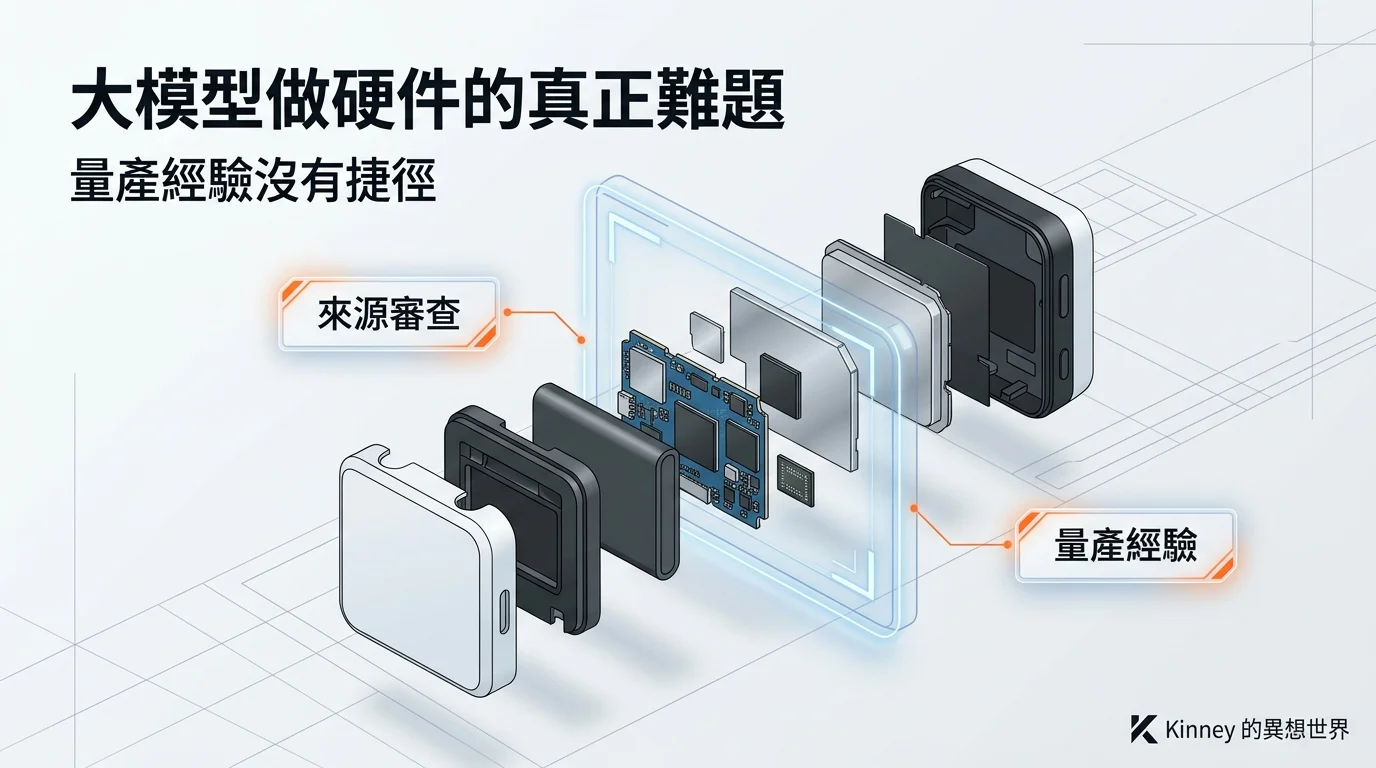
While software can fix bugs via remote updates, once hardware enters mass production, modifying designs, replacing parts, and re-validating require significant time and capital. Experience in areas like thermal management, battery stability, and supplier coordination is often accumulated through multiple iterations of mass production and revision—it cannot be replicated simply through design files.
The most commercially valuable craftsmanship details rarely appear in published papers or databases. They are accumulated in factory yield reports, process parameters developed through decades of brand-supplier collaboration, and the hard-won experience of countless mass production trials and errors. Models can synthesize public knowledge, but they cannot conjure unrecorded manufacturing experience out of air.
The moat of hardware lies not only in patents and schematics, but also in mass production experience, supply chain coordination, and process know-how. These are difficult to codify, let alone copy quickly.
Apple's allegations against suppliers in this lawsuit touch precisely on this point. The complaint states that a manufacturing partner allegedly performed a specific metal finishing process for OpenAI under the mistaken belief that "Apple had approved" it. Another power and battery supplier allegedly received technical inquiries using Apple's proprietary internal terminology.
If true, these allegations point to a more fundamental dilemma: how a new company absorbs the experience brought by employees while proving its products do not use its former employer's secrets. This is the most commercially significant question raised by the entire case.
Business Risks of the Lawsuit
Rather than the damages claimed, the more critical concern is the uncertainty this lawsuit injects into OpenAI's hardware roadmap.
If Apple can prove to the court that confidential information entered the design process, OpenAI may need to isolate the teams or data involved and perform a thorough origin review of existing hardware designs. Depending on future court decisions, product launch timelines could be affected.
The litigation itself may also alter the trust dynamics of external partnerships. Both suppliers and investors may raise more questions about the source of knowledge within OpenAI's hardware team. Even if the court ultimately finds no trade secret misappropriation, the design origin reviews required during litigation could slow down product momentum.
This lawsuit has not proved that OpenAI stole Apple's technology. But it reveals a new frontier of competition: as AI companies step into the physical world, the rules of engagement extend from algorithmic performance to product design, manufacturing processes, and supply chain expertise.
AI can iterate rapidly in the cloud. But there are no shortcuts in mass production.
常見問題 FAQ
What hardware documents and components are involved in Apple's lawsuit?
In its complaint, Apple accuses former engineer Liu of downloading technical files, including motherboard manufacturing and testing presentations, and accuses former product design VP Tan of requesting candidates to bring physical Apple parts—such as batteries, SiP (system-in-package) components, main logic boards (MLBs), and shields—for demonstration during OpenAI interviews. These allegations have not yet been adjudicated.
Why is hardware mass production experience considered a key barrier for AI model companies?
Unlike software, which can be patched remotely, hardware designs cannot be easily changed once mass production starts. Thermal design, battery safety, and supplier coordination require years of empirical manufacturing experience that design blueprints alone cannot fully capture.
What is the potential impact of this trade secret lawsuit on OpenAI's hardware plans?
If the court accepts Apple's arguments, OpenAI might be forced to isolate key personnel and data, leading to redesigns or launch delays. The lawsuit also increases compliance and audit costs while raising questions from potential partners and investors, even if the allegations are ultimately dismissed.