Tyranny Falls: They Chanted 'Death to America' for 47 Years. The Missiles Came. The People Celebrated.
Iran chanted Death to America for 47 years. American missiles actually arrived. Khamenei's office was bombed. What came from the streets of Tehran wasn't wailing — it was laughter. Slogans are the cheapest defense budget. None of the people chanting them were sitting in their own living rooms.
On May 1, 2003, George W. Bush stood on the deck of the USS Abraham Lincoln in a flight jacket, a "Mission Accomplished" banner behind him. Live national broadcast, a military salute, and he declared: "Major combat operations in Iraq have ended." Over four thousand American soldiers disagreed with that assessment, but their opinions could no longer be delivered — they stayed behind in the deserts of Baghdad and Fallujah.
On February 28, 2026, the exact same three words appeared again. This time the setting was an 8-minute pre-recorded video on Truth Social. No aircraft carrier, no uniform, no Oval Office. Trump sat before the camera and announced that the U.S. military had launched major combat operations in Iran. Code name: Operation Epic Fury. A declaration-of-war-level decision, delivered through a phone app to the entire world.
The 47-Year Invoice
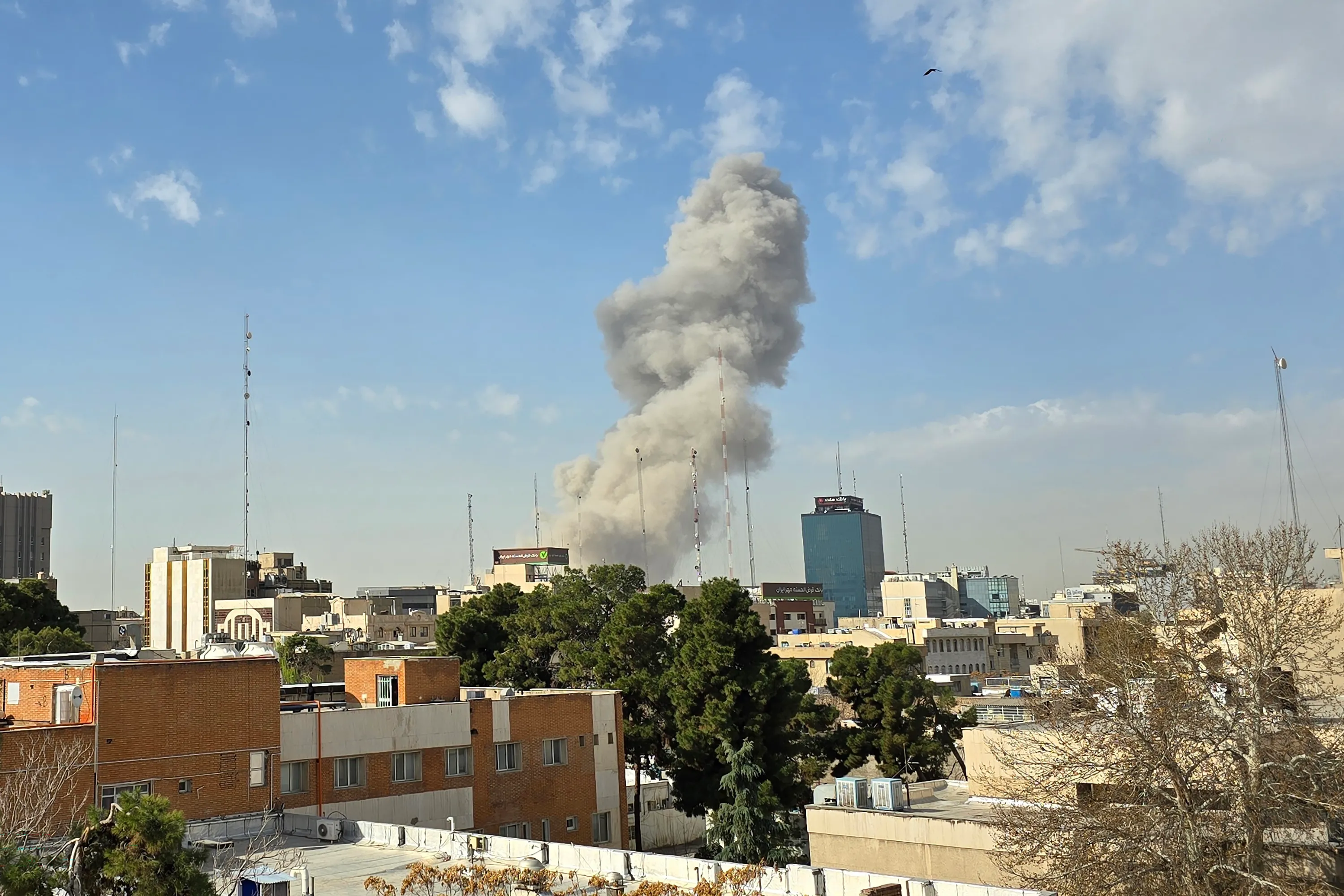
Tehran, Isfahan, Qom, Kermanshah, Tabriz. On the same day, skies over cities from north to south were filled with smoke. U.S. forces coordinated with Israel's "Roaring Lion" operation, targeting missile facilities, naval bases, and IRGC command centers. Trump listed his targets in the video: destroy missiles, flatten missile industry, annihilate the navy. He even addressed the Iranian people directly to camera: "Your moment of freedom has arrived. Go take over your government."
Stirring words. But that's not the question I want to ask. My question is this: this theocratic regime that has chanted "Death to America" for 47 years — death actually showed up at the door. In 47 years of slogans, who exactly was protected?
The Cost of Slogans
In 1979, Khomeini overthrew the Pahlavi dynasty. While the people were still waiting for bread amid revolutionary chaos, he was already installing the next operating system: _Marg bar Âmrikâ_ — Death to America. Four syllables in Persian that became the regime's true national anthem. More effective than the constitution, because nobody recites the constitution every day. More important than oil, because oil feeds the economy while slogans feed the regime itself. The logic is simple: without an external enemy, the revolution loses its reason to continue. Chant it every Friday prayer, every Revolution Day, every parliament session. Schoolchildren learn these four words from their first day of school, chanting until their mouths form muscle memory while their brains long ago stopped processing the meaning.
Article 27 of the Iranian Constitution guarantees freedom of assembly — with one condition: "not violating fundamental Islamic principles." How elastic is that condition? In 2022, a 22-year-old woman named Mahsa Amini was dragged into a police van by morality police for showing a few centimeters of hair beneath her hijab. She died in custody three days later. Streets nationwide erupted in fury. The regime that "protects Islam" responded with: live ammunition, tear gas, mass arrests, executions. Supreme Leader Khamenei later explained to the world: "Death to America targets American policies, not the American people." Fine. Then the missiles hitting Tehran today are targeting your policy facilities, not your people. Same logic, different direction — suddenly it doesn't work anymore.
Iranians themselves saw through this farce long before any foreign commentator. During the 2019 nationwide protests, the loudest chant on the streets wasn't "Death to America" but something else entirely: "Neither Gaza nor Lebanon, my life is for Iran!" Translation: the regime pours money into Syria, pumps weapons into Lebanon, feeds Hezbollah, feeds the Houthis, keeps other people's militants well-fed and clothed, while its own people struggle through inflation. "Anti-Americanism" was never a foreign policy position. It was a stability maintenance tool. Every extra year the slogan is chanted, another year's budget gets approved for the Revolutionary Guards, and the black turban on the Supreme Leader's head stays steady for one more day.
Then came February 28, 2026 — the 47-year slogan's ultimate stress test. U.S.-Israeli missiles hit Khamenei's office. The moment smoke rose, the sound from Tehran's streets wasn't wailing — it was laughter. Someone pointed at the smoke column and said "that's the leader's house." Others shouted thanks to Israel in Persian. The people who had been organized to chant "Death to America" every Friday for 47 years, on the day American bombs actually fell, stood on the side of the bombs. This isn't pathology. It's the final reckoning squeezed out of 47 years of oppression. When your government has been robbing you for 47 years using "anti-Americanism" as its brand, the missiles don't pretend they're for your own good — they just come to blow things up.
The Boomerang
The Iranian regime's hypocrisy is only one side of this war. Flip it over — the other side is equally ugly.
In October 2024, candidate Trump had a signature slogan: No new wars. In June 2025, he ordered airstrikes on Iranian nuclear facilities, then told reporters "I don't want regime change — that only brings chaos." In February 2026, the same man said regime change "would be the best thing that could happen for Iran and for the world." Then: major combat operations. Eighteen months. From "no new wars" to full military action — no commentary needed. This timeline is its own indictment.
But merely blaming Trump is too cheap. The more important question is systemic: what kind of system allows one person to go from a peace pledge to a declaration of war in 18 months while Congress watches from the sidelines? The U.S. War Powers Act says in black and white: the president must obtain congressional authorization within 60 days or withdraw. From Vietnam to Iraq to Libya, every president has circumvented this law — different methods, same result. On Day One of Operation Epic Fury, legislators spoke up to condemn the "unauthorized" action. Condemnation is condemnation; missiles don't wait for votes.
Thucydides recorded a line 2,500 years ago during the Peloponnesian War: "The strong do what they can, and the weak suffer what they must." America exercised its air strike capability. Tehran's theocrats exercised their right to retaliate, launching missiles at the Fifth Fleet headquarters in Bahrain, U.S. bases in Kuwait and Qatar, and Al Dhafra Air Base in the UAE. Both sides' power centers were playing chess. The ones who shatter are never the chess players. A civilian in Abu Dhabi was killed by Iranian missile debris. In Doha, an intercepted Iranian ballistic missile's wreckage fell from the sky and detonated in a residential area. Iran's "retaliation" didn't hit a single American soldier but managed to crater the roads of Qatar and the UAE. Slogans can't protect their own people, and missiles can't hit the other side's military.
The Mirror
Iran's 47 years of slogans couldn't stop a single missile. The Revolutionary Guards spent decades building bunkers for their own people; ordinary Tehran parents didn't even know where to take their children. After the strikes began, Iran's nationwide internet nearly collapsed. Citizens couldn't open a single civil defense guide — the only thing that worked was state media's propaganda channel. The regime's first response wasn't to save people but to grab footage, packaging a school damaged in the conflict in the south as evidence of "U.S.-Israeli bombing of children." That same day, intercepted Iranian ballistic missile debris in Doha and Abu Dhabi did land on civilian streets.
Slogans are the cheapest defense budget. They can't stop missiles. Tehran parents don't know where to take their children. An economy sanctioned for decades can't even scrape together enough for self-rescue. The only function of slogans is to keep the people who ordered the chanting safely seated in their underground bunkers. None of the people chanting them were sitting in their own living rooms.
The Iranians celebrating in Tehran's streets today answered a question that the 47-year propaganda machine never dared ask: if the regime is truly protecting you, why are you applauding when it's attacked?
There is more than one place in the world where people are required to stand up and chant similar slogans every day. Perhaps they should look at Tehran's sky today and ask themselves: if slogans really work, after 47 years of chanting, why did missiles come in the end?
_(Data sources: Trump Truth Social video statement, Iranian Constitution Article 27, Thucydides' History of the Peloponnesian War, Iran International field reporting, Al Jazeera multi-city strike coverage. Corrections welcome if any factual errors are found.)_
_—Kinney's Wonderland_