Hong Kong Needs a Book Safety Centre
Chris Tang says selling books is like selling food: booksellers must ensure their products are safe. Hong Kong should therefore create a Book Safety Centre, complete with thought-ingredient labels, ideological allergen warnings and sedition testing.
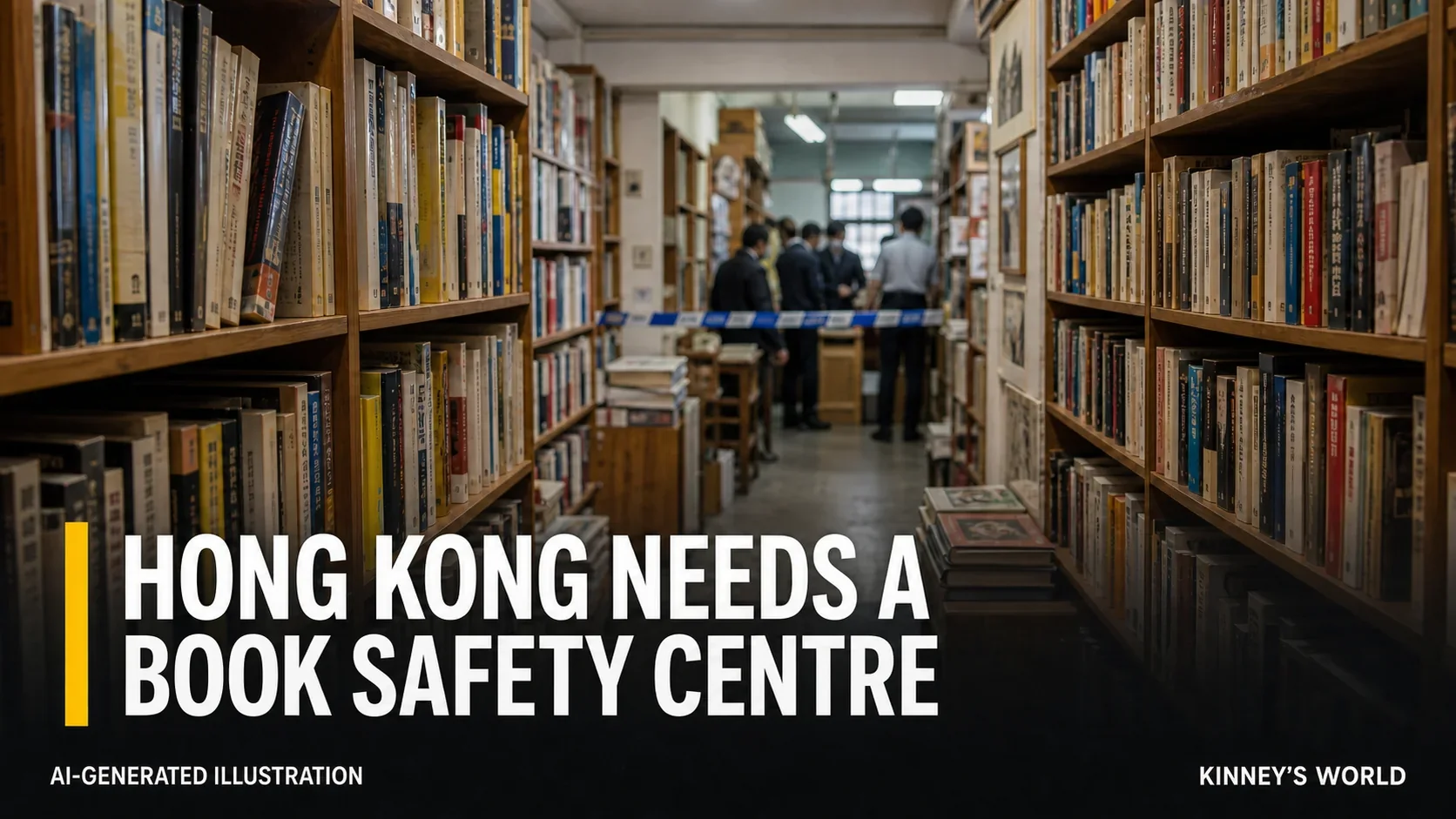
On 15 July, Hong Kong's National Security Department searched two independent bookshops in the Mong Kok district, Have a Nice Stay and Greenfield Book Store, and arrested five men and women. Police accused them of displaying and selling publications with seditious intent. The next day, Secretary for Security Chris Tang explained that booksellers are responsible for ensuring that the books they sell do not endanger national security, just as a restaurant must not sell poison. It is an inspiring comparison. Hong Kong already has a Centre for Food Safety. What it clearly lacks is a Book Safety Centre.
Once established, the Book Safety Centre should sample-read every new title before it reaches the shelves, testing for sedition content, historical bacteria and residues of critical thought. Every back cover should carry a thought-ingredient label: 60 per cent government-approved narrative, 30 per cent patriotic nutrition and 10 per cent unsterilised awareness of problems. Any book above the permitted limit should carry a red warning: "This book contains material that may arouse hatred against the Government of the HKSAR, the judiciary or law enforcement agencies." Serious cases should trigger a full recall. Readers who have already taken the book home should stop thinking immediately and rinse their memories with clean water.
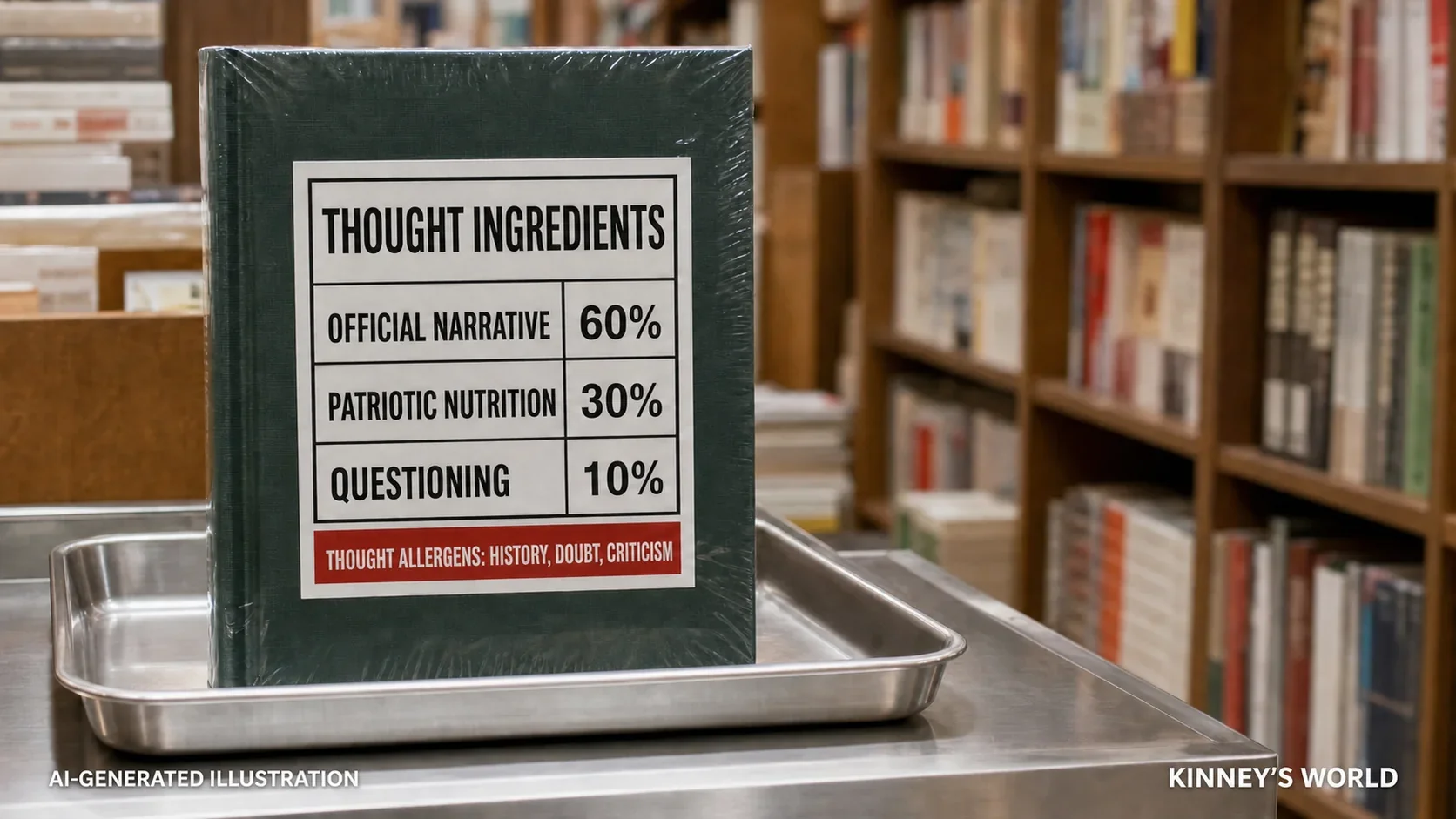
The government should also introduce a thought-allergen regime. Any book containing historical memory, questions about power, judicial commentary or common sense must state so clearly on its contents page. Some citizens may suffer an allergic reaction to official explanations after exposure to these ingredients. Symptoms include frowning, checking sources and asking follow-up questions. Bookshop staff who notice these symptoms should alert the authorities as soon as possible, before thought begins to cross-infect the community.
Real food safety comes with published standards, laboratory methods and recall procedures. Book safety offers only two answers: "the law is very clear" and "every case is different". The government refuses to provide a list of banned books because someone might change a title. Yet a book has an author, publisher, edition and ISBN. Changing its title merely changes the packaging. Rotten meat renamed "Prosperity Beef Tenderloin" remains rotten meat, but the government does not abolish the food recall system because labels can change.
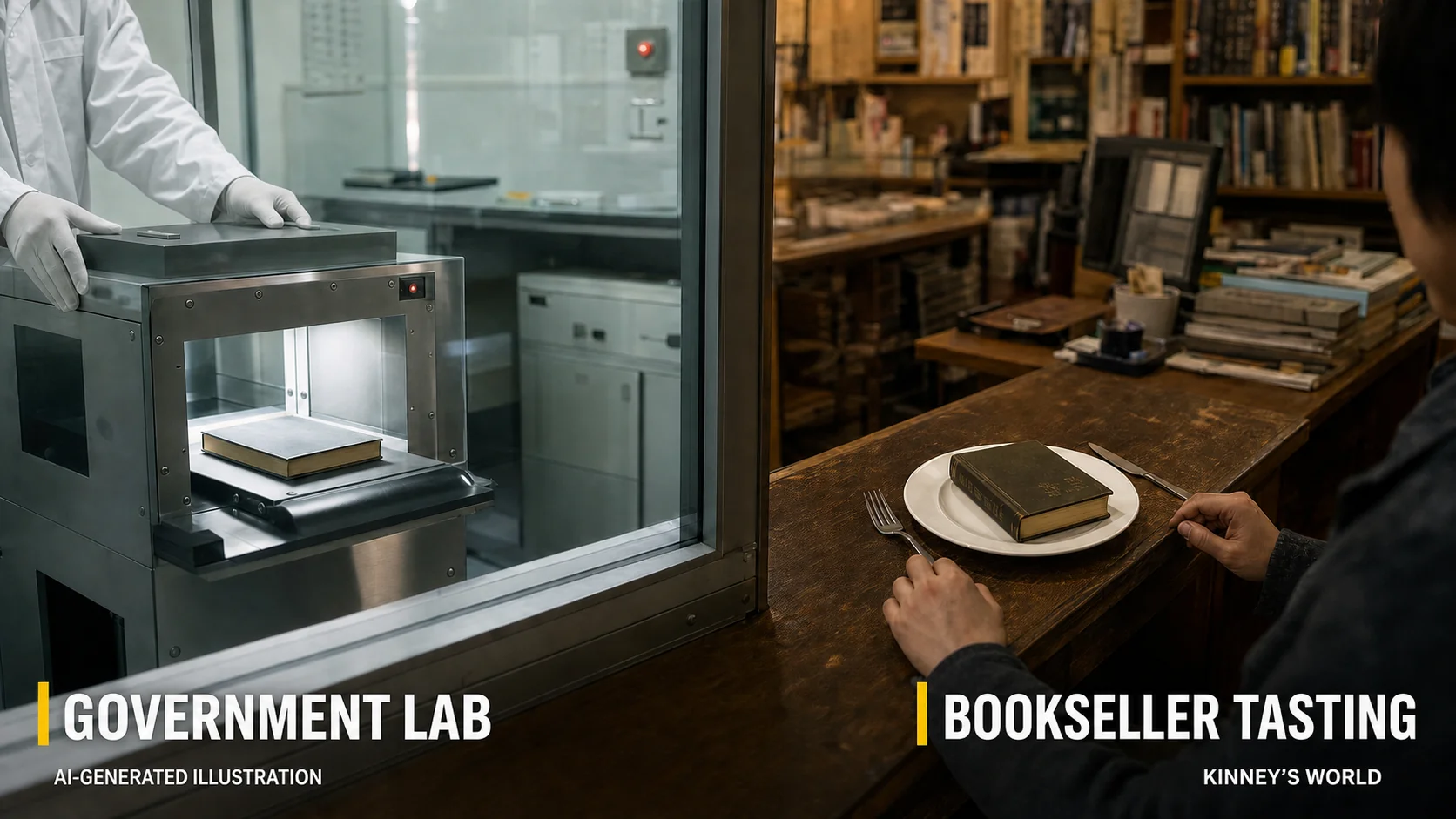
If the authorities can read a book, judge intent and arrest a bookseller, they can also tell the trade what content has crossed the line. Published standards constrain the enforcer. Vague standards constrain only the bookseller. A shop owner must read every title, predict the author's intent, then predict how the police and courts will interpret it later. Guess correctly and the shop can keep paying rent. Guess incorrectly and the police arrive. The government controls the laboratory and the judgments; the bookseller does the tasting.
The Roman Catholic Church once used the Index of Forbidden Books to control what the faithful could read. It did not remove the Index's force in ecclesiastical law until 1966. Even the Church was willing to print the titles, so believers knew which book might endanger their souls. Hong Kong's modern governance goes one step further. It does not need to publish a title; society only needs to see who gets arrested. A list leaves a boundary. An arrest teaches everyone to widen that boundary themselves.
Food enters the body, and bacteria do not debate with you. Books enter the mind, and readers can agree, reject the argument or close the cover. A free society trusts adults to judge for themselves. An authoritarian system believes thought requires quarantine. Classifying books as poison amounts to declaring that citizens have no judgment and only the government possesses immunity.
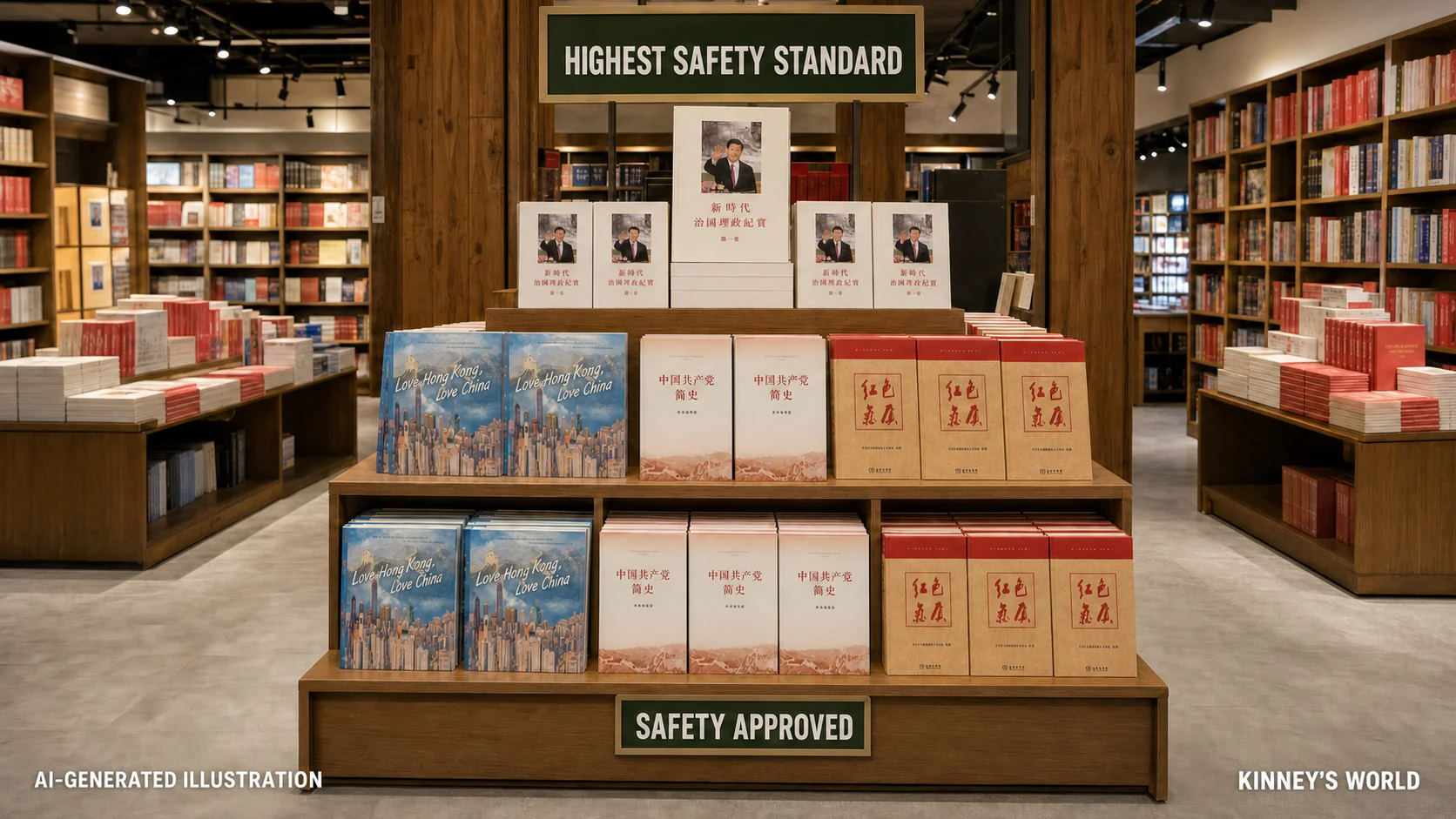
This system does not even need a Book Safety Centre. Every arrest is an industry training session. Every bookshop that closes becomes course material. Once everyone learns to remove any book that might cause trouble, Hong Kong's shelves will reach the highest safety standard: no poison, only patriotic books.
常見問題 FAQ
Does the Hong Kong government maintain an actual list of banned books?
On 16 July 2026, Secretary for Security Chris Tang said the government would not provide a list of prohibited titles. Enforcement would instead consider a book's content and whether the conduct involved seditious intent. The proposed "Book Safety Centre" is satire aimed at this asymmetry: the government refuses to publish the boundary while requiring booksellers to bear the legal risk of judging it incorrectly.
Why does the article compare book safety with food safety?
The comparison came from Chris Tang. He said booksellers must ensure that books do not endanger national security, just as food sellers must ensure that food does not cause stomach pain or contain poison. Food safety has published microbiological criteria, analytical methods and recall procedures. The article applies the same administrative language to books and asks why booksellers receive only a vague red line.
When did the Vatican remove the legal force of the Index of Forbidden Books?
On 14 June 1966, the Vatican's Congregation for the Doctrine of the Faith announced that the Index no longer carried the force of ecclesiastical law or its attached penalties, although it retained a moral advisory role. The contrast in this article is deliberate: the older system at least named the books, while Hong Kong's approach leaves the trade to infer the boundary from arrests.