95% of History Has Been War: War Is the Norm, Peace Is the Intermission
We are living inside a statistical anomaly, yet we’ve mistaken the anomaly for a new normal. The long peace is nothing but centuries of historical bloodshed packaged into a complex geopolitical derivative, hiding existential tail risk off the balance sheet.
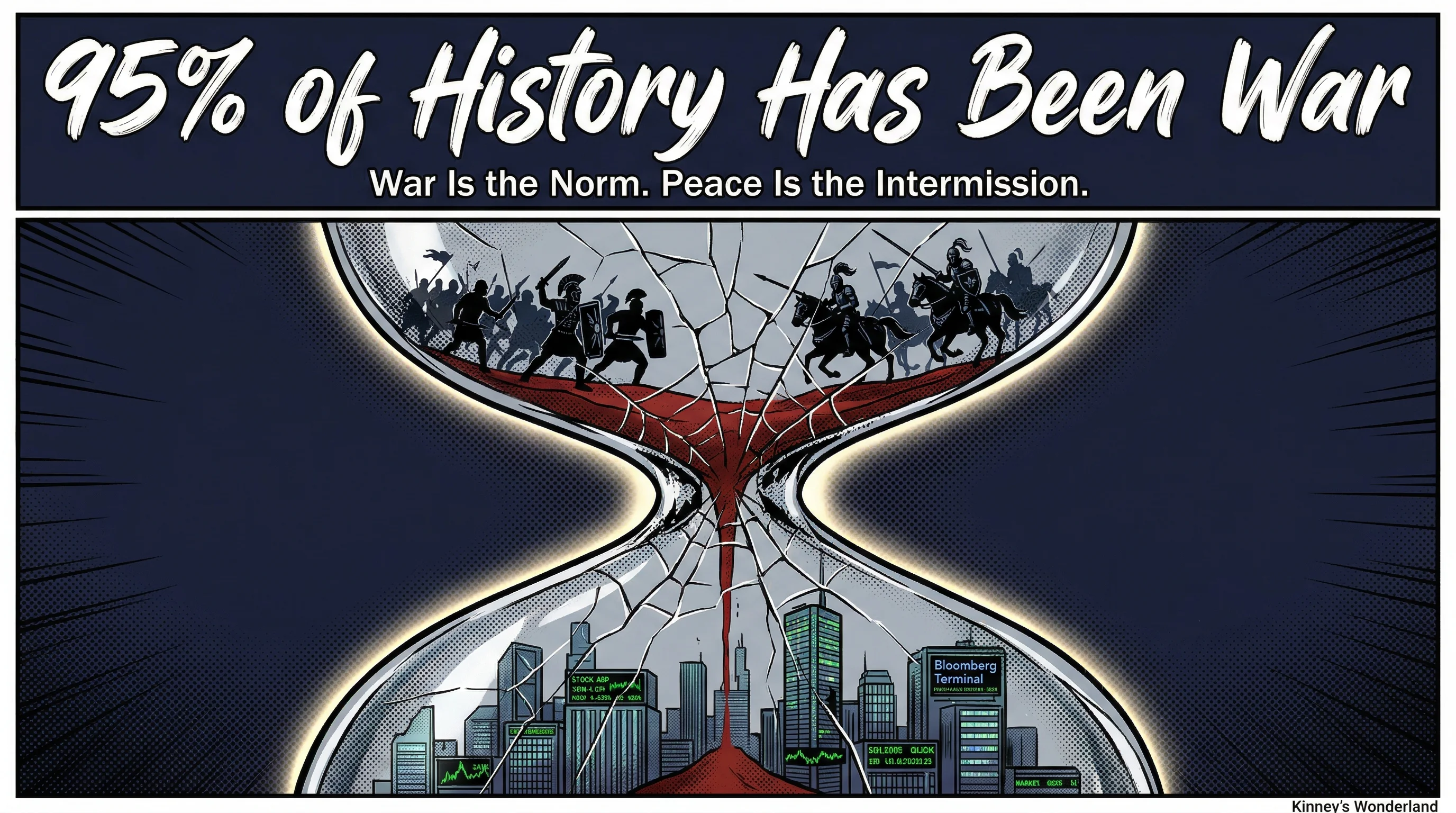
Every morning at 9:30 AM, hundreds of thousands of quants sit in front of their Bloomberg Terminals, inputting assumptions and tweaking models. Their DCFs include inflation expectations, Fed rate paths, and supply chain delay risk premiums. Only one parameter is forever set to zero: the probability of great power war.
This isn't an oversight. It's a religion.
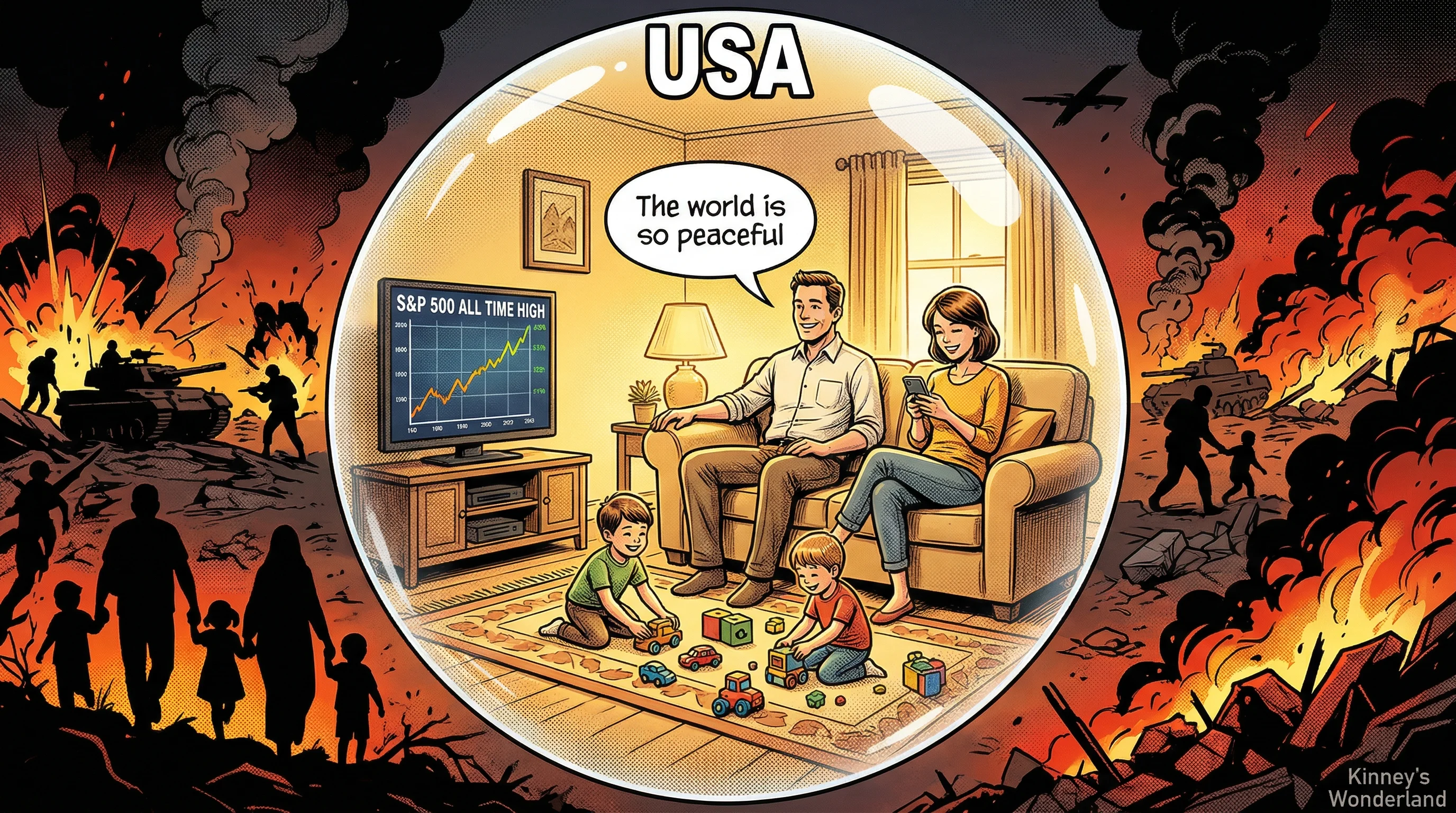
The copper powering his servers comes from hand-dug mines in the Congo. The neon gas required for his semiconductors is processed on the edge of the Ukrainian war zone. The coffee he drinks every day was shipped on freighters escorted by US carrier strike groups. He marks all these as "stable inputs" in his models. In 2024, there were 61 active armed conflicts worldwide—an all-time high since UCDP (Uppsala Conflict Data Program) began keeping records. Eleven of these reached war level, with approximately 160,000 deaths. That same year, the S&P 500 hit an all-time high. He calls this alpha. History calls it an illusion.
An 811-Year Ledger of Violence
The mainstream Western narrative loves to package the Magna Carta of 1215 as the origin of democracy and freedom, as if humanity had suddenly learned to replace violence with contracts. The reality is that the English barons who forced King John to bow had zero interest in democracy; they were simply furious that the King was taxing them arbitrarily to fight wars, thereby damaging their real estate income. In the words of the US National Archives: "The Charter was a feudal document, intended to protect the rights and property of a few powerful families." And what happened after it was signed? Pope Innocent III annulled it immediately, triggering the First Barons' War. This "document of peace" was merely the prologue to another war.
From 1215 to 2026, 811 years. Jack Levy, a political science professor at Rutgers, spent his entire academic career quantifying this history. His dataset covers 1495 to 1975, recording 119 wars involving great powers, of which 64 were direct clashes between them. That's an average of one per decade. Break it down by century, and the impact is even more staggering: in the 16th century, great powers were at war 95% of the time. The 17th century, 94%. The 18th century took a slight breather at 78%. The 19th dropped to 40%. The 20th century rebounded to 53%. During the 94 years between 1511 and 1606, there were only three years without a great power war. Three. (The widely circulated Will and Ariel Durant claim of "268 years without war" in all of history has been debunked by O'Neill in PNAS as "policy folklore," but Levy's hard data confirms the same intuition: war is the norm, peace is the intermission.)
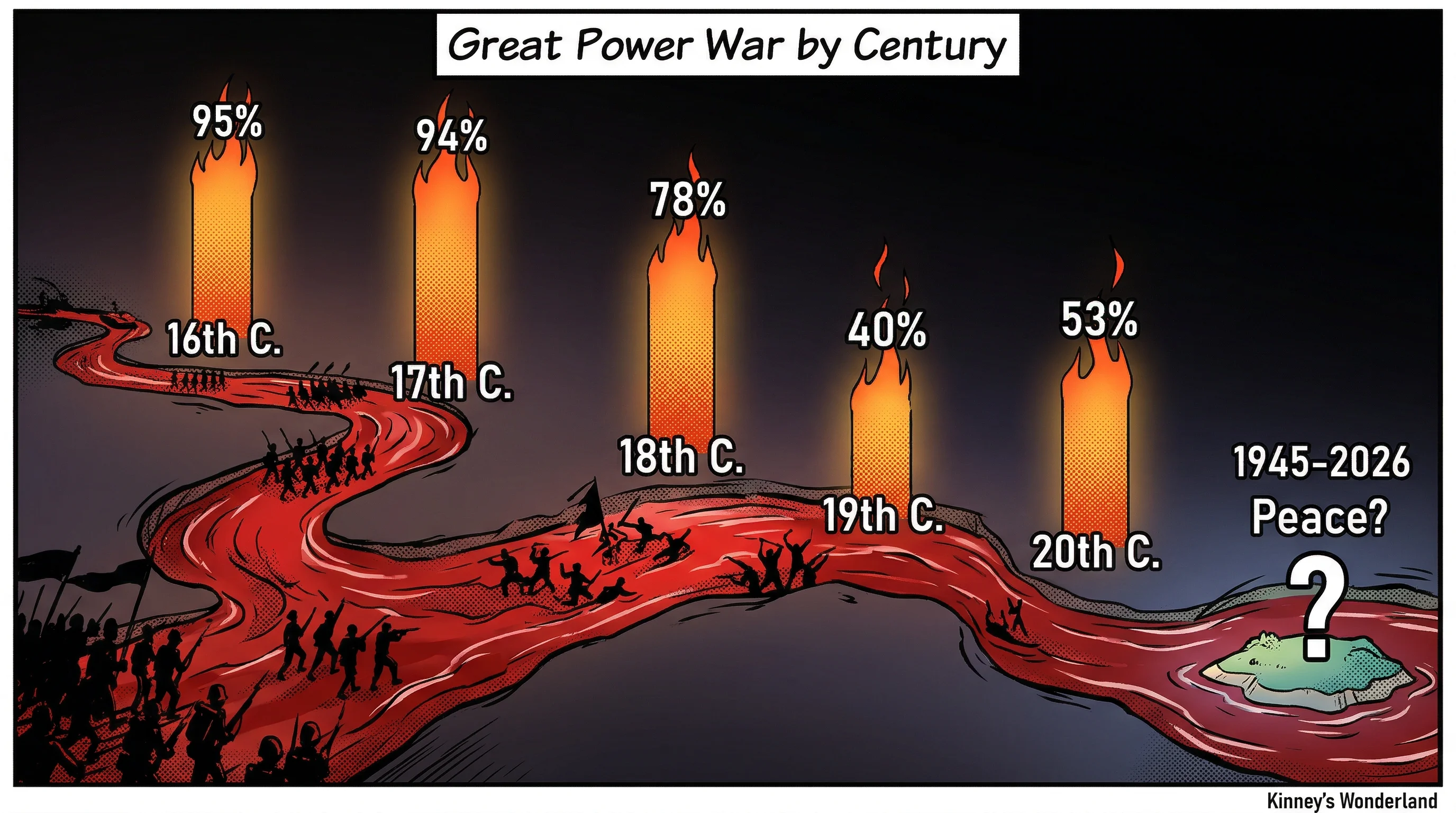
What about the "balance of power breathing room" of the 19th century? Following Napoleon's defeat in 1815, the Congress of Vienna indeed established an order of mutual constraint among European powers, reducing direct combat on the continent. But this wasn't peace; this was displaced violence. During the exact same period, Britain was at war in its global colonies practically every single year. The Opium Wars, the Eight-Nation Alliance—the prosperity of London and Paris was built on blowing open China's doors, dumping opium, and extracting massive indemnities. The "century of peace" inside Europe was a bill paid in blood by Asia and Africa.
The 81 years since the end of WWII represent the longest period of direct peace among great powers in Levy's 500-year dataset. Zero direct wars between major powers. Placed on an 811-year timeline, this accounts for less than 10%. We are living inside a statistical anomaly, and we've mistaken it for the new normal.
The Risk Manager of 2007
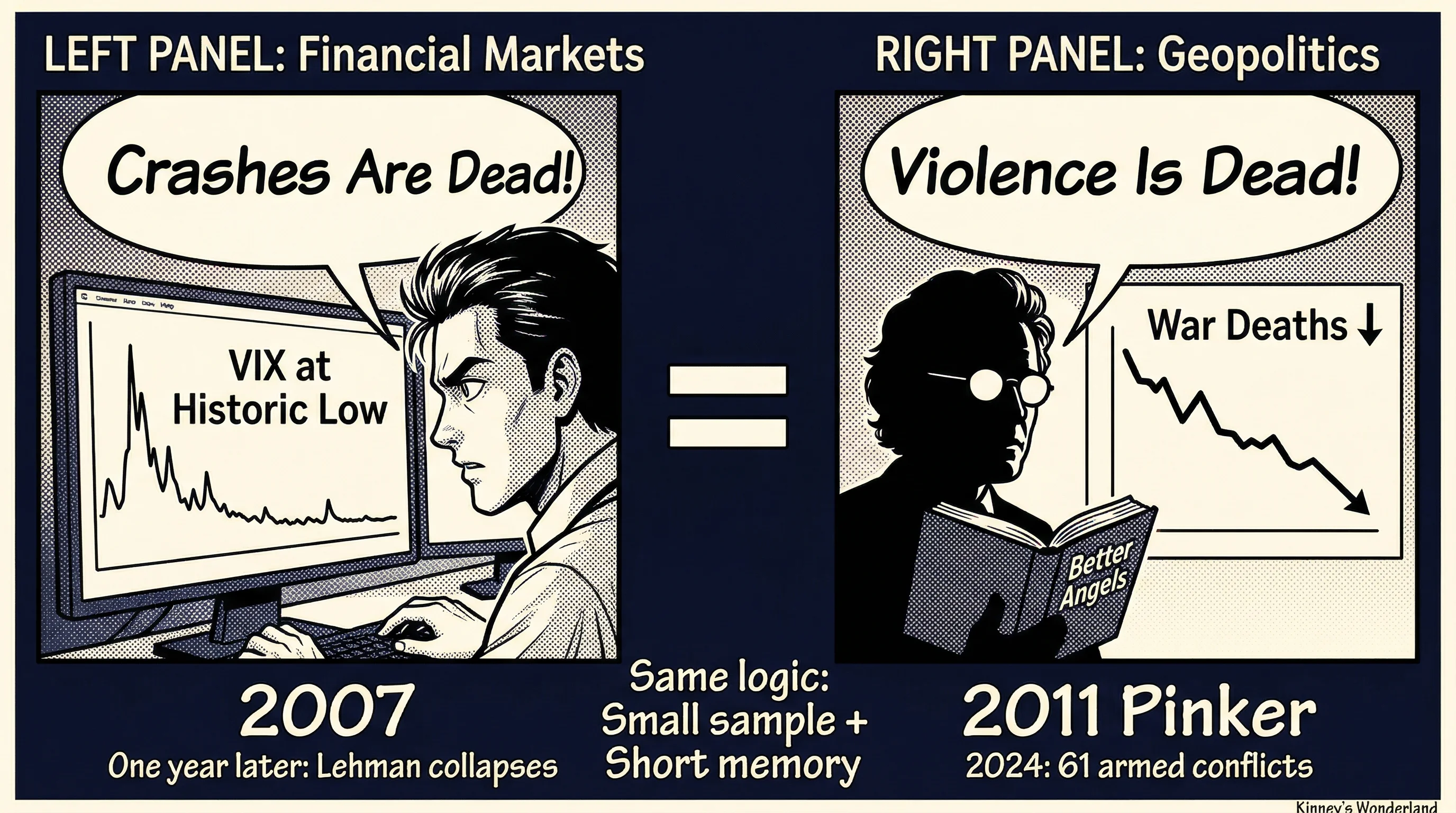
In 2011, Steven Pinker published The Better Angels of Our Nature, using hundreds of pages of data to argue a comforting conclusion: violence is declining. His core data point: combat deaths in the 20th century accounted for about 0.7% of the global population, whereas the violent death rate in pre-state societies was as high as 15%. His conclusion: we are living in the most peaceful era in human history.
There is a fatal flaw in this argument. Nassim Taleb and statistician Pasquale Cirillo applied extreme value theory to two millennia of war data, publishing their findings in Physica A in 2016. Their conclusion was the exact opposite: "There is no statistical basis to claim 'things are different now'." The interval between wars is memoryless and incompatible with any temporal trend. War is the "mother of all fat tails," where a tiny number of events account for the overwhelming majority of casualties. Applying normal distributions to war data is mathematically wrong—like predicting stock market crashes using a bell curve.
Pinker looking at 70 years of data and declaring violence dead is using the exact same logic as a retail investor looking at the historically low VIX in 2007 and declaring market crashes dead. In 1910, British economist Norman Angell published The Great Illusion, arguing that economic interdependence made war economically unprofitable. At the time, Germany was Britain's second-largest trading partner, and Britain was the largest market for German exports. Between 1903 and 1913, Anglo-German trade grew by roughly 65%. Four years later, WWI erupted. A century later, Pinker did the exact same thing. History's boomerang never misses an appointment.
Nuclear deterrence combined with hyper-globalization has indeed suppressed direct friction between great powers. But this doesn't mean war has vanished. It has simply been financialized. High-frequency, low-impact local conflicts have been swapped for low-frequency, infinite-consequence tail risks. Volatility hasn't disappeared; it's simply been compressed into a smaller and smaller bottle. The 61 conflicts of 2024 are hairline cracks in the cap. And since 1946, not a single year has passed without an armed conflict. Zero exceptions.
Taleb delivered a line that deserves to be engraved on the desk of every risk manager: "If someone claims violence has decreased, and then shows you fifty years of data, just smile."
The Peace Dividend Balance Sheet
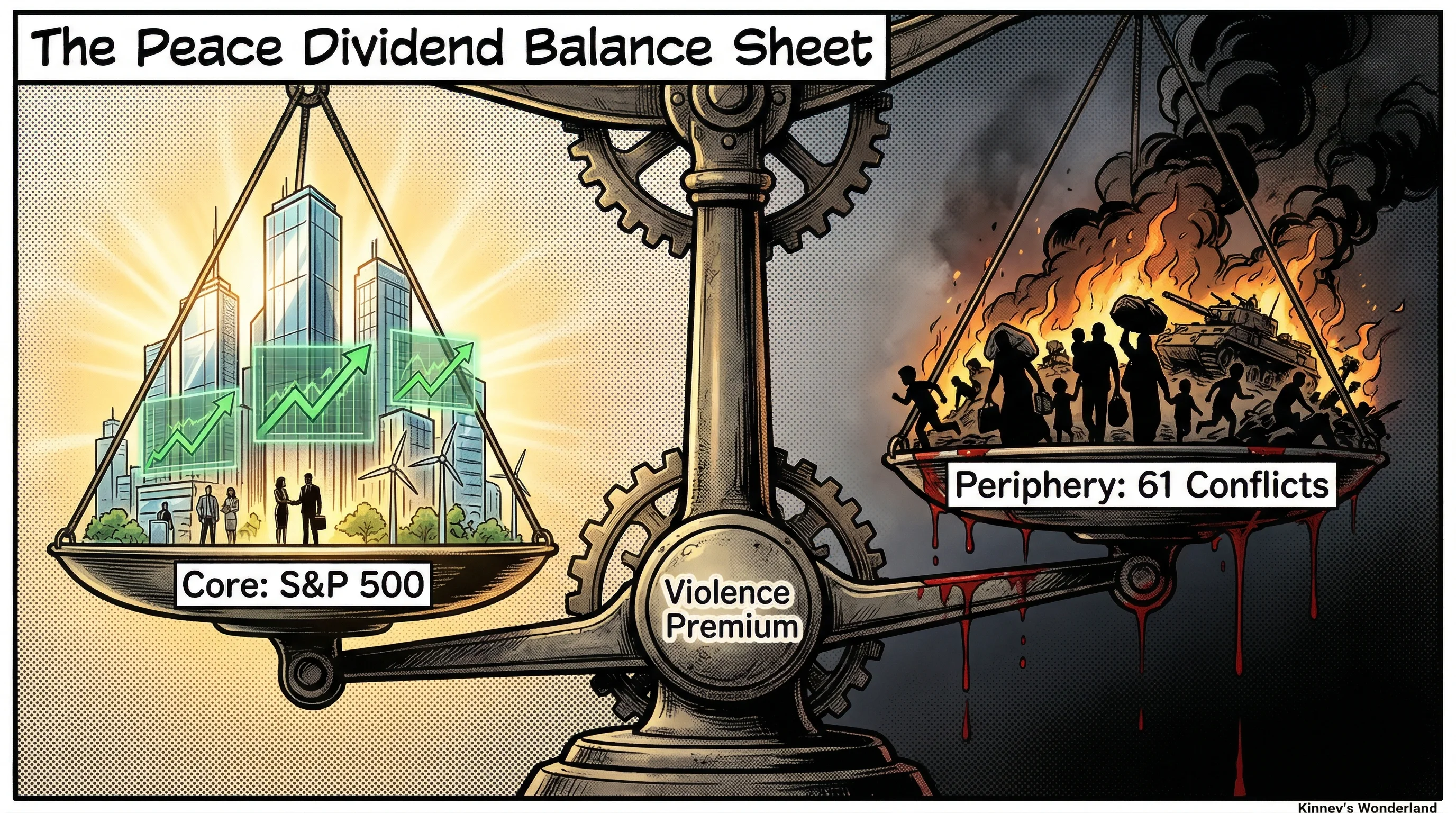
How much has the market priced in for this risk? Absolutely zero.
The valuation of the S&P 500, the 40-to-50x P/E ratios of tech stocks—all are built on an unshakable assumption: the Core remains permanently safe. If the market priced risk according to Levy's historical data, acknowledging that great powers are at war between 40% and 95% of the time, the geopolitical risk premium would spike to a level nobody would dare touch. Every single dollar in your portfolio implicitly contains an insurance policy that "great powers will never go to war." No one is underwriting this policy. No one is hedging it. No one is pricing it.
Those 61 active conflicts are not the failure of the "rules-based international order." On the contrary, they are its pressure relief valves. The Periphery absorbs kinetic friction so the risk premium in the Core can remain artificially suppressed. Johan Galtung called this "negative peace"—the mere absence of direct warfare while violence processes continuously through institutional structures via poverty, exploitation, and inequality. The Core enjoys exactly this, and the cost of maintaining it is the continuous bleeding of the Periphery. Proxy wars during the Cold War killed an estimated 20 million people, 99% of whom were in developing nations.
The stability and wealth of the Core are structurally dependent on continuously extracting raw materials and cheap labor from the Periphery. Immanuel Wallerstein's world-systems theory pointed this out long ago: the prosperity of the Core is never self-sufficient; it requires continuous blood transfusions from the edge. The so-called "peace dividend" is effectively a "violence premium" extracted from the Periphery—it's geopolitical seigniorage. And when the margin call arrives, it is always paid in blood.
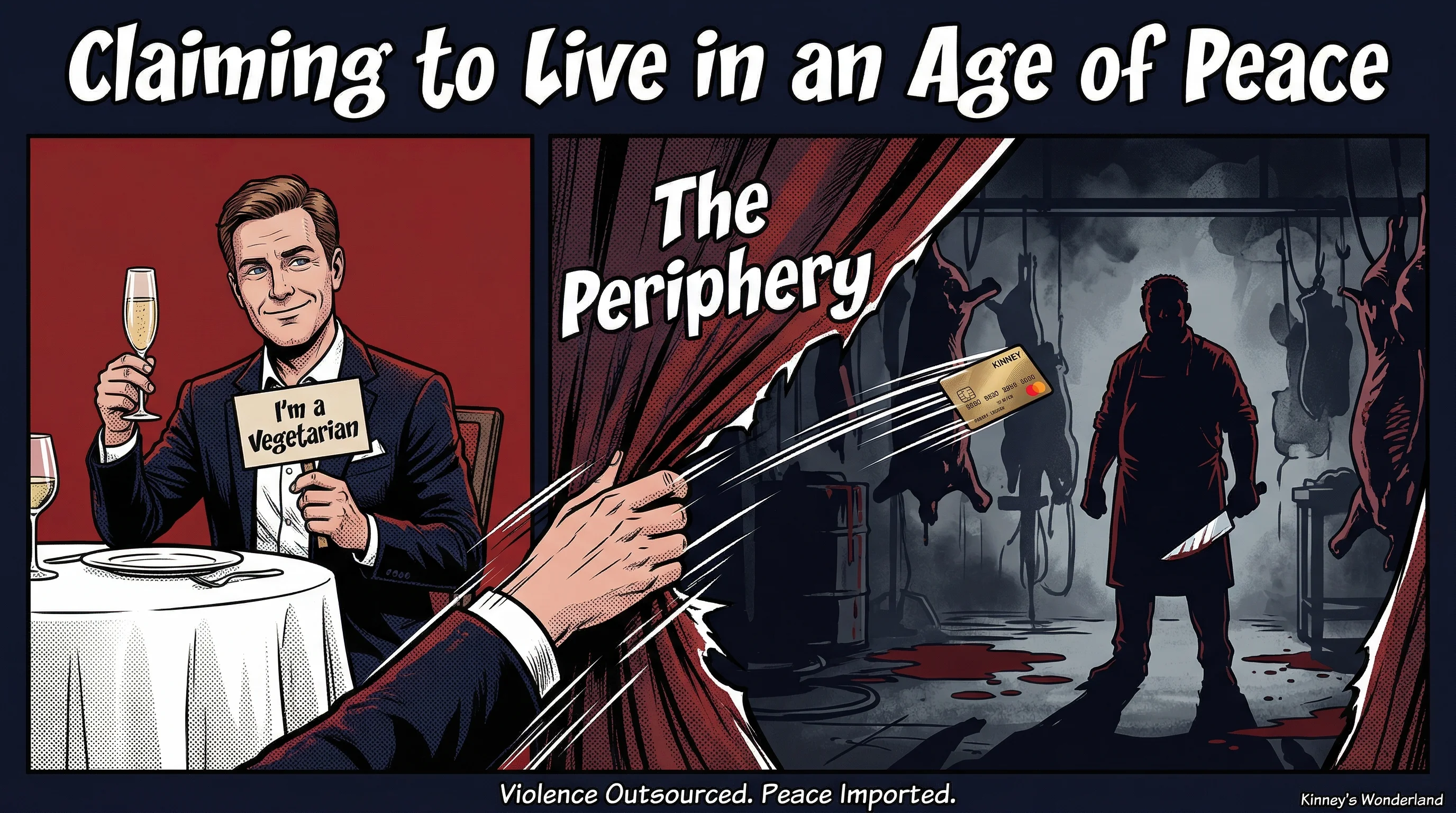
Claiming you live in an age of peace because Manhattan wasn't bombed is the equivalent of claiming you're a vegetarian because you pay someone else to kill your dinner.
Volatility Is Unfolding
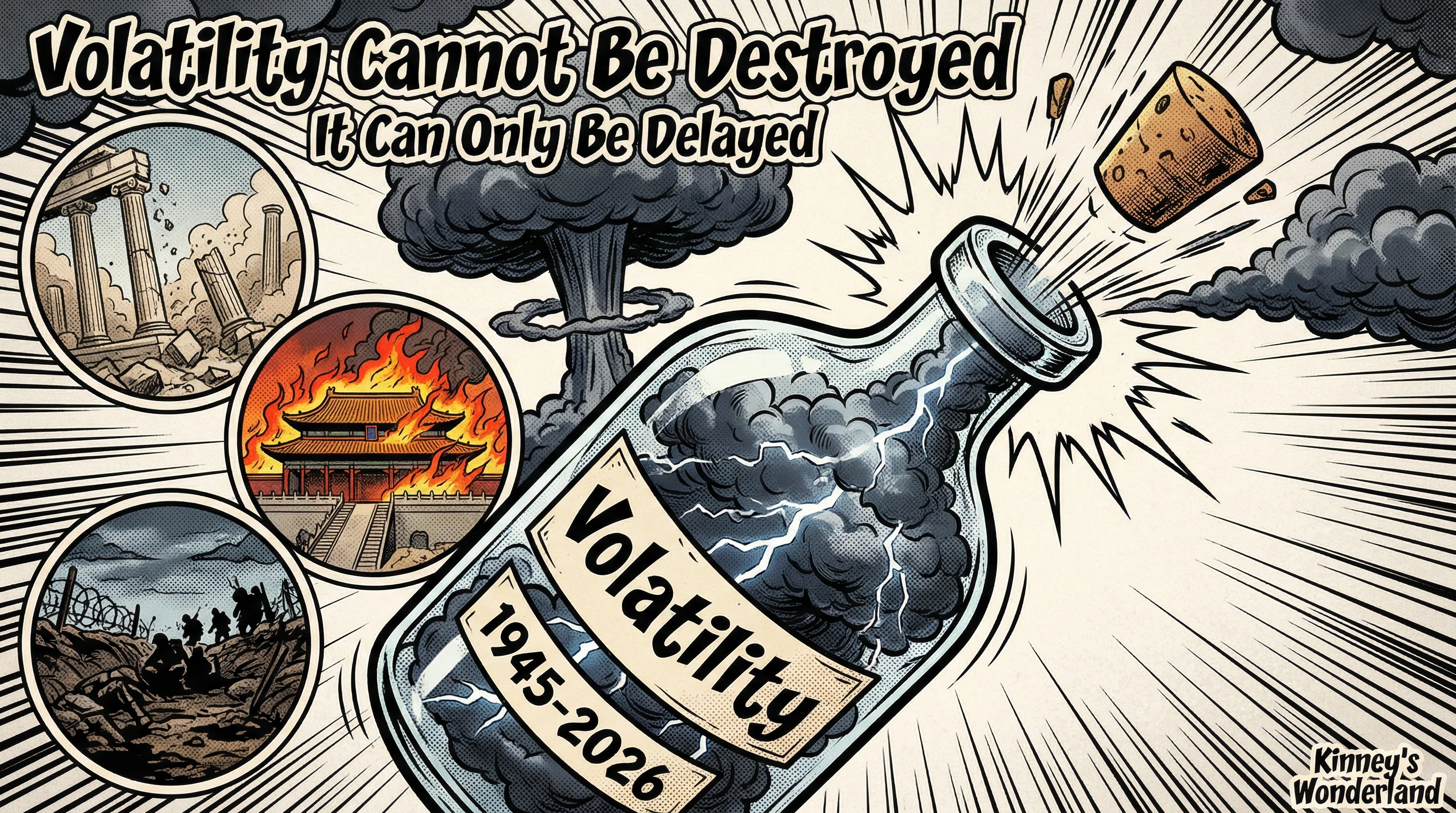
Every "long peace" has an internal mechanism for sustaining itself. The rule of history is that this very mechanism eventually becomes the instrument that destroys the peace.
The Pax Romana lasted two hundred years, and collapsed the moment Marcus Aurelius died. The Song Dynasty bought 122 years of peace with annual tributes, only to invite the Jin armies through the gates in an attempt to destroy the Liao—ultimately sending themselves to the gallows. The Concert of Europe held the peace for a century, and Angell argued war was obsolete right at the peak of its prosperity. Every single time the elite class declares violence tamed, violence flips back from a blind spot they couldn't see. History doesn't neatly repeat, but its rhythm never changes.
Princeton international relations scholar Robert Gilpin described the sequence of hegemonic collapse: maintenance costs rise continuously, economic and technological advantages diffuse to competitors, the hegemon falls into a fiscal crisis, it attempts peaceful readjustment, and when adjustment fails, the system marches to war. America's wars in Iraq and Afghanistan cost between $4 and $6 trillion, paid for through borrowing. Welfare spending surged from 5% of federal outlays in 1900 to 47% in 2010. The empire's bills keep expanding, and the number of people willing to pay them keeps shrinking.
That’s the fiscal layer. The behavioral layer is even worse. The core of Prospect Theory: winners are cautious, losers gamble. Leaders during hegemonic stability cautiously maintain the status quo because they are winning. Leaders in hegemonic decline start gambling because they are losing, and they cannot afford to lose. For an empire losing its premier global status, the psychological pain is vastly greater than the pleasure of initially acquiring it. A declining hegemon transforms from a rational risk manager into a fear-driven gambler. Preemptive strikes, aggressive sanctions, rapid militarization—these aren't madness; they are the rational responses of loss aversion.
Harvard's Graham Allison studied 16 cases over the last 500 years where a "rising power challenged the ruling hegemon." Twelve of them ended in war. That's 75%. Thucydides wrote a line 2,400 years ago: "Peace is an armistice in a war that is continuously going on." For two and a half millennia, the shelf life of that sentence has outlasted every international treaty.
The system is rapidly exhausting the Periphery zones capable of absorbing kinetic friction. Violence is beginning to flow back toward the Core. Steven Levitsky and Daniel Ziblatt warn that the regression of democracies doesn’t start with military coups; it starts when mainstream political parties abandon their gatekeeping responsibilities. John Mearsheimer is even more blunt: "The sad fact is that international politics has always been a ruthless and dangerous business, and it is likely to remain that way."
Modern humanity did not conquer war. We merely financialized it. We packaged centuries of historical bloodshed into a complex derivative called the "rules-based order," sold the "peace dividend" to three generations of naive consumers, and hid the existential tail risk completely off the balance sheet. But in geopolitics, just exactly as in the markets, volatility cannot be destroyed. It can only be delayed.
常見問題 FAQ
Why claim that "95% of history has been war"?
According to the quantitative dataset compiled by Rutgers University professor Jack Levy, spanning from 1495 to 1975, great powers were engaged in warfare for 95% of the years during the 16th century, and 94% in the 17th century. Even the widely celebrated "post-WWII long peace," when placed on an 811-year macroeconomic timeline, accounts for less than 10%. Statistically, our current era is an anomaly, not the new normal.
What is the "Violence Premium" in the "Peace Dividend Balance Sheet"?
This concept is rooted in the "core-periphery" structure of global geopolitics. The stability and high valuations of the Core (like the US and the S&P 500 market) are built on outsourcing violence and tail risk to the Periphery. For instance, with 61 active armed conflicts in 2024, the peripheral regions absorb the kinetic friction of the system, allowing the risk premium in the Core to remain artificially suppressed. This acts as the geopolitical equivalent of seigniorage.
Statistically speaking, where did Steven Pinker's "decline of violence" theory go wrong?
Nassim Taleb and statistician Pasquale Cirillo applied extreme value theory to two millennia of conflict data, demonstrating that the interval between wars is "memoryless" and follows a "fat-tailed distribution." Pinker used just 70 years of normally-distributed data to declare violence dead, which is mathematically akin to an investor looking at the historically low VIX in 2007 and claiming stock market crashes are a thing of the past. It dangerously underestimates the irreversible destruction caused by a small number of extreme "black swan" events.