Kwok Yin-sang's Insurance Policy
A father paid into his daughter's education policy for 21 years — HK$88,000. AIA's computer automatically changed one line of record. The insurance agent taught him to sign on someone's behalf, then reported him. Age 69, no criminal record, 8 months immediate imprisonment.
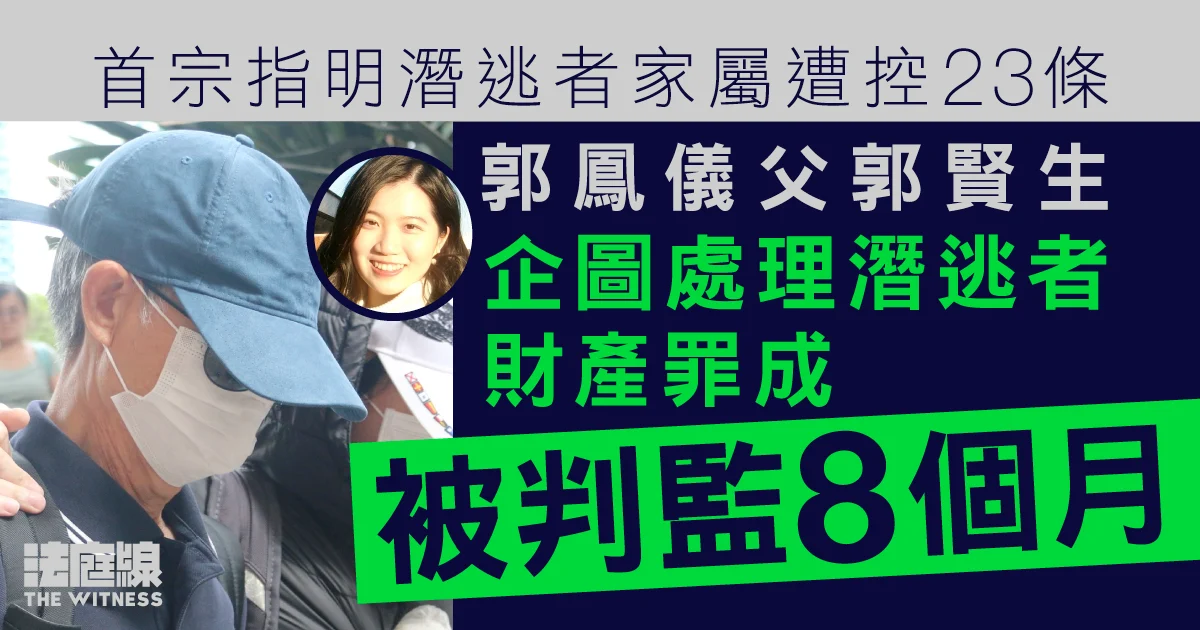
In January 1999, a Hong Kong father walked into AIA Insurance and bought an education policy for his two-year-old daughter. "Parent-Child Education Savings Plan" — monthly payments, for 21 years, fully paid up in 2020. HK$88,000 in the account.
Hundreds of thousands of Hong Kong families have done the exact same thing.
On February 26, 2026, at the West Kowloon Magistrates' Courts, the father was sentenced to 8 months' immediate imprisonment. The charge: "attempted dealing with funds or property of a specified absconder," in violation of Section 97I of the Safeguarding National Security Ordinance. Maximum sentence: 7 years.
His name is Kwok Yin-sang. Age 69. No criminal record.
Who Is the Policyholder?
99% of people who've ever bought insurance can't answer this question.
AIA's back-end system has an automatic setting: on the day the insured person turns 18, policy ownership transfers from the policyholder to the insured. No signature required from the insured. The insured doesn't need to have paid a single dollar of premium. No notification to the insured. AIA's Head of Customer Service, Yan Wai-ching, confirmed in court: the company's computer system completes the change on the day the insured person turns 18.
Kwok Fung-yi turned 18 in 2017. From that day forward, according to AIA's system records, this policy that her father had paid into for 18 years had nothing to do with him anymore.
Kwok Fung-yi never signed a policy transfer receipt. Never provided a signature specimen. Never paid a single cent of premium.
The defense revealed an even more embarrassing detail in court: after Kwok's eldest son Kwok Hoi-tung reached adulthood, Kwok Yin-sang continued to act as policyholder — filing accident claims, changing payment methods on his behalf. AIA processed every request without once questioning "you're no longer the policyholder."
AIA itself never treated the "automatic transfer" as real — until one day it needed it to be.
Yan Wai-ching acknowledged that "the company's system or internal processes may have errors." But she insisted: the policyholder after reaching adulthood would not be Kwok Yin-sang.
In 2017, a computer changed one line of record. Eight years later, the meaning of that line became: the HK$88,000 Kwok Yin-sang wanted to retrieve legally belongs to a person subject to a HK$1 million bounty.
A machine decided his fate without his knowledge.
27 Years of Service
Cheng Wai-yi, the Kwok family's insurance agent, had been serving the family since 1999 — since Fung-yi was two years old. Twenty-seven years.
On December 24, 2024 — Christmas Eve — the Hong Kong government gazetted Kwok Fung-yi as a "specified absconder" under Article 23. She was in Washington, running an organization called the "Hong Kong Democracy Council."
Ten days later, on January 4, 2025, Kwok Yin-sang called Cheng Wai-yi and said he wanted to surrender the policy. His daughter wasn't in Hong Kong, the policy was useless, and he didn't want to keep paying.
Cheng informed him that the policyholder was no longer him — surrendering the policy required Fung-yi's own signature. Kwok said his daughter wasn't in Hong Kong and had no Hong Kong bank account. Could the surrender check be made out to him instead? Cheng said no.
Then she suggested a plan. First, transfer the policyholder back from Fung-yi to Kwok Yin-sang, then process the surrender. She proactively prepared three documents: personal information update, change of policyholder, and cash surrender application.
In mid-February, Kwok returned the signed documents along with a copy of Fung-yi's ID. Cheng noticed the forms had expired, and Fung-yi's phone number and email were not filled in. She asked for new signatures. The policy was about to auto-renew and deduct payment, and Kwok didn't want to be charged.
At this critical moment, in her own words from court testimony, Cheng "in a moment of urgency" suggested that after Kwok signed the new forms, he should "write Kwok Fung-yi's name next to it."
She did not witness the signing process, but she signed as a witness on the documents.
Three things she didn't do: She didn't tell Kwok that handling an absconder's property might constitute a criminal offense. She didn't tell him that Article 97 provides a legal pathway — applying to the Secretary for Security for a "license" to handle the funds. She didn't refuse to assist in the entire operation.
One thing she did: She reported him to the National Security Department.
Twenty-seven years of service. She walked him through the forgery, then turned him in.
12 Hours
On April 17, 2025, at 3:30 PM, the National Security Department came for Cheng Wai-yi. She was taken to the police station and held for over 12 hours, until 5:10 AM the next morning. Seventeen pages of statement were recorded. Police issued her a "Notice to Person in Custody," cautioned her, and informed her there were grounds to believe she had committed criminal offenses.
Cheng denied in court that she had been "arrested." Her account: "The police came to find me," "They asked, I answered," "They didn't ask me to get a lawyer."
On April 30, Kwok Yin-sang was arrested in Tseung Kwan O. Under caution, he said only one thing: "The policy was paid by me. I have the right to cancel it."
Then the deal came. Cheng Wai-yi was granted immunity by the prosecution, on the condition that she testify against Kwok Yin-sang as a protected witness. The charges against her — fraud and forgery — all disappeared.
During cross-examination, defense counsel Kwan Man-wai dug into the cracks. During examination-in-chief, Cheng said Kwok had told her the signature on the documents was signed by Fung-yi. As soon as cross-examination began, she changed her account to "not sure" whether he said that. The defense pressed: you gave a statement on April 17, then another on July 19. In neither statement did Kwok's alleged claim that "Fung-yi signed" appear. Twice. Zero mentions.
Cheng agreed.
The defense characterized her testimony as "a tissue of lies," pointing out that as a witness granted immunity, she had a "strong incentive to maintain false claims" to assist the prosecution.
Magistrate Cheng Lim-chi acknowledged that Cheng Wai-yi did have a "strong incentive to maintain false claims." But she determined that Cheng's suggestion to forge signatures and her acting as a false witness were borne of "carelessness and convenience" rather than malice.
Conclusion: a credible and reliable witness.
The person who instigated the forgery — "careless and convenient" — all charges dropped. The person who followed the instigation — 8 months in prison.
The Tipping-Off Prohibition
Hong Kong's anti-money laundering legislation has a design feature: when financial institutions discover suspicious transactions, they are obligated to report to law enforcement. After reporting, the law prohibits them from notifying the customer. This is called the tipping-off prohibition.
Your insurance company knows that what you're doing could land you in prison. It cannot tell you. The law forbids it.
And Section 97 of Article 23 clearly provides a legal pathway: anyone may apply to the Secretary for Security for a "license" to handle assets related to absconders. The condition is that the Secretary is satisfied that the license is "reasonable and necessary" and "will not be detrimental to national security." In other words, it requires one official's approval.
The pathway exists. But throughout this entire affair, nobody told Kwok Yin-sang. The insurance agent didn't say. AIA didn't say. The Security Bureau didn't proactively notify. Legal Aid didn't intervene.
At the High Court bail hearing, NSL-designated judge Jeremy Poon asked the prosecution: "Put yourself in his shoes. If you were a father and wanted to get the money back, what would you do?"
The prosecution answered: "I would follow the ordinance and tell the Secretary for Security that I want to get the money back."
Justice Poon granted bail. Conditions: HK$200,000 cash surety, daily police station reporting, travel ban, surrender of all travel documents, and no direct or indirect contact with Kwok Fung-yi.
When announcing the last condition, Justice Poon paused: "Although it is somewhat inhumane, I need to do this."
Defense: "After all, they are father and daughter."
Justice Poon: "Contacting her will only draw suspicion to yourself. It's not forever."
Not forever. Eight months.
The System's Final Product
A computer automatically changed one line of record in 2017. An insurance agent proactively taught him to forge a signature in 2025. The agent then reported him after the forgery. The law prohibited anyone from alerting him that he was breaking the law. A legal pathway existed. Nobody told him.
Magistrate Cheng set the starting point at 9 months, reduced by one month for his age of 69 and clean record.
Among the hundreds of thousands of "Parent-Child Education Savings Plans" in Hong Kong, every single policy contains the same automatic transfer clause.
HK$88,000. 21 years. 8 months.
When Kwok Yin-sang left the courtroom, he waved once to the public gallery. Someone called out from behind: "Take care of yourself."
He didn't look back.
_(All facts in this article are sourced from public court proceedings reported by Court Line, Ming Pao, Sing Tao, and HK01. Corrections welcome if any factual errors are found.)_
_—Kinney's Wonderland_